For more information, feel free to contact our friendly team!
Illumina Non-invasive Prenatal Test
We offer the Illumina Non-invasive Prenatal Tests, from 10 weeks. An Ultrasound Scan is included in the price.
For Saturday appointments please use this booking link:
Illumina Veriseq
Non-invasive prenatal testing (NIPT) can identify a pregnancy in which the baby is likely to have a chromosome condition. These conditions are uncommon.
NIPT can be requested from 10 weeks’ gestation we perform an ultrasound scan to confirm your gestation prior to taking your blood sample. Collecting a mother’s blood sample for NIPT poses no threat to the fetus.
Our NIPT routinely screens for these chromosome conditions:
- Down syndrome (trisomy 21)
- Edwards syndrome (trisomy 18)
- Patau syndrome (trisomy 13)
You also have the option to determine the sex of your baby. The test can be performed from 10 weeks of pregnancy.
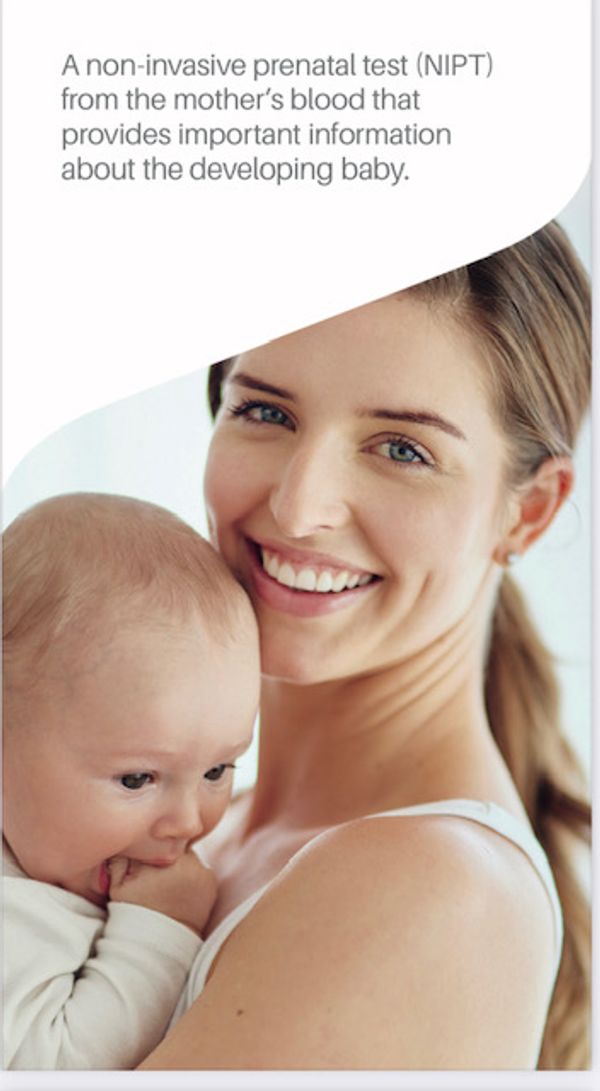
Illumina is appropriate as a primary screening test for pregnant women of all ages. Down syndrome and certain other chromosomal conditions occur more frequently in babies born to mothers over 35 years old. Other conditions for which Illumina screens – such as microdeletion syndromes – occur with the same frequency in babies,
regardless of the mother’s age.
Currently, Illumina cannot be used in the following types of pregnancies:
• Malignancy
• Fetal demise
• Vanishing twin
• Triplets and Quads
• Organ/Bone marrow transplant
During pregnancy, some of the DNA from the baby crosses into the mother’s bloodstream. DNA is organized in structures known as chromosomes, which carry the baby’s genetic information. Illumina uses a blood sample from the mother to analyse the baby’s DNA for certain chromosomal conditions that could affect the baby’s health.
Illumina is a non-invasive prenatal test (NIPT). This means that Illumina is safe for you and your baby. To have the test done, your healthcare provider just takes a sample of blood from your arm. The sample is then sent to a lab for processing.
Many pregnant women want to know about the health of their baby. Some women have a higher chance for chromosomal abnormalities because of their age, family history or other screening test results. However, certain conditions such as the microdeletions that are on Illumina’s panel affect women of all ages at the same rate.
Regardless of your age or family or reproductive history, Illumina can help determine your baby’s risk of being affected with a chromosome condition. The Illumina prenatal screen is designed for women of any age and ethnicity who are at least 10 weeks pregnant.
It is available for twin pregnancies/but for gender in twins – a female result will apply to both babies, a male result will apply to either one or both babies.
It is also available for IVF pregnancies including, egg donor, frozen eggs. Frozen embryos, sperm donor, and surrogacy
NIPT BASIC (with or without Gender)
A small, missing (or “deleted”) piece of a chromosome is called a microdeletion. Unlike Down syndrome, which occurs more frequently in mothers who are 35 and older,
microdeletions occur in pregnancies at the same rate for mothers of any age.
In many cases, there are no obvious ultrasound abnormalities that would suggest the fetus has a microdeletion. While many microdeletions have little impact on a child’s health and life, there are some that can cause intellectual disabilities and birth defects. Illumina screens for six microdeletions, all of which can be associated with serious health issues:
NIPT ADVANCE (with or without Gender) detects the following chromosomal anomalies:
Down Syndrome (Trisomy 21)
Edwards Syndrome (Trisomy 18)
Patau Syndrome (Trisomy 13)
Gender – Male (XY) Female (XX) – (Optional)
And the following Sex chromosome anomalies:
DiGeorge syndrome 2
(occurs in about 1 in 2,000 births)
22q11.2 deletion syndrome / DiGeorge syndrome Babies born with 22q11.2 deletion syndrome often have heart defects, immune system problems, and mild-to-moderate intellectual disability. They may also have kidney problems, feeding problems, and/or seizures. Up to 25% of individuals with this syndrome develop schizophrenia in
adulthood.
1p36 microdeletion syndrome
(occurs in about 1 in 5,000 births)
Babies born with 1p36 deletion syndrome have weak muscle tone, heart and other birth defects, intellectual disabilities, hearing loss and behavior problems. About half will have seizures.
Angelman syndrome/Prader-Willi syndrome (15q11-q13 deletion syndrome)
(occurs in about 1 in 12,000 births)
Babies born with Angelman syndrome often have delayed milestones (like sitting, crawling and walking), seizures, and problems with balance and walking. They also have a severe intellectual disability and most do not develop speech.
Prader-Willi-like syndrome (SIM1 syndrome)
(occurs in about 1 in 10,000 births)
Babies born with Prader-Willi syndrome have low muscle tone and problems with feeding and gaining weight. They also have intellectual disability. As children and adults, they have rapid weight gain and often develop obesity-related medical problems.
Cri-du-chat syndrome (5p deletion syndrome)
(occurs in about 1 in 20,000 births) Cri-du-chat syndrome, also known as 5p minus Babies born with Cri-du-chat syndrome typically have low birth weight, small head size, and decreased muscle tone. Feeding and breathing difficulties are also common. They have a moderate-to-severe intellectual disability
4p16.3 deletion syndrome (Wolf-Hirschhorn syndrome)
(occurs in approximately 1 in every 20,000 to 50,000 births)
Distinctive Facial Appearance: Often described as a “Greek warrior helmet” facies, featuring a broad nasal bridge continuing to the high forehead, prominent glabella, wide-set eyes (hypertelorism), and microcephaly. Growth and Development: Prenatal and postnatal growth restriction, severe intellectual disability, and delayed motor skills like sitting and walking. Medical Complications: Muscle hypotonia (weak tone), seizures, and potential congenital malformations involving the heart or palate.
NIPT ABSOLUTE (with or without Gender)
Our most comprehensive NIPT test package yet, NIPT Absolute checks for a wide range of chromosomal anomalies along with microdeletions.
It includes gender if required.
NIPT Absolute detects the following chromosomal anomalies:
• Down Syndrome (Trisomy 21)
• Edwards Syndrome (Trisomy 18)
• Patau Syndrome (Trisomy 13)
• Gender – Male (XY) Female (XX) – (Optional)
• Sex chromosome anomalies (as above)
• 92 microdeletions
Illumina is not the only screening test available during pregnancy. However, it is the only screening test which Cherish-UK offers, mainly because of the test accuracy, turnaround times, expert laboratory geneticists and low failure rates.
Illumina is a screening test; it is not a diagnostic procedure. This means that test results from Illumina only alert you of the likelihood that your baby has a chromosomal condition. To diagnose a chromosomal condition, invasive diagnostic tests such as chorionic villus sampling (CVS) or amniocentesis, can be done.
For an early pregnancy ultrasound scan we recommend that you arrive with a full bladder and drink a litre of fluid prior to your appointment. This will improve the quality and aid visibility of the ultrasound scan.
Our early pregnancy ultrasound scan fees cover all aspects of your appointment which will include the following:
– Full Consultation
– Transabdominal Ultrasound Scan and/or Transvaginal Ultrasound Scan
– Black and White Ultrasound Scan Image(s)
– Ultrasound Scan Report
– The folder which is suitable for storing maternity records
– Display card for ultrasound images
Please Note: It may be necessary for both a transabdominal and transvaginal ultrasound scan to be performed. If this is the case then no extra charge is made.
Service Pricing:
Monday - Friday:
The Illumina test costs £450
The Illumina with Microdeletions test costs £500
The Illumina absolute 92 Microdeletions test costs £550
Illumina test results are usually available within 5-10 days from when the sample is received in the lab.